Skip to content
Is IPTV legalIPTV legalityLegal IPTVIPTV lawIPTV fines

Is IPTV legal? Three questions and where the law draws the line

Published: Updated: 4 min read
Share:

Get your free 24-hour trial

Tell us your device and we send a ready-to-use login on WhatsApp.

  • Free for 24 hours
  • No credit card
  • Login in about 2 minutes
Prefer Telegram?

We only use these details to set up your trial.

Short answer: IPTV as a technology is legal. Whether a specific IPTV service is legal depends on the rights it holds, and what that means for you as a viewer depends on your country. Most confusion comes from treating those three points as one question.

Below, we separate them, show where the law draws the line in several countries, and give you a five-minute check to run on any seller before you pay. This is general information, not legal advice.
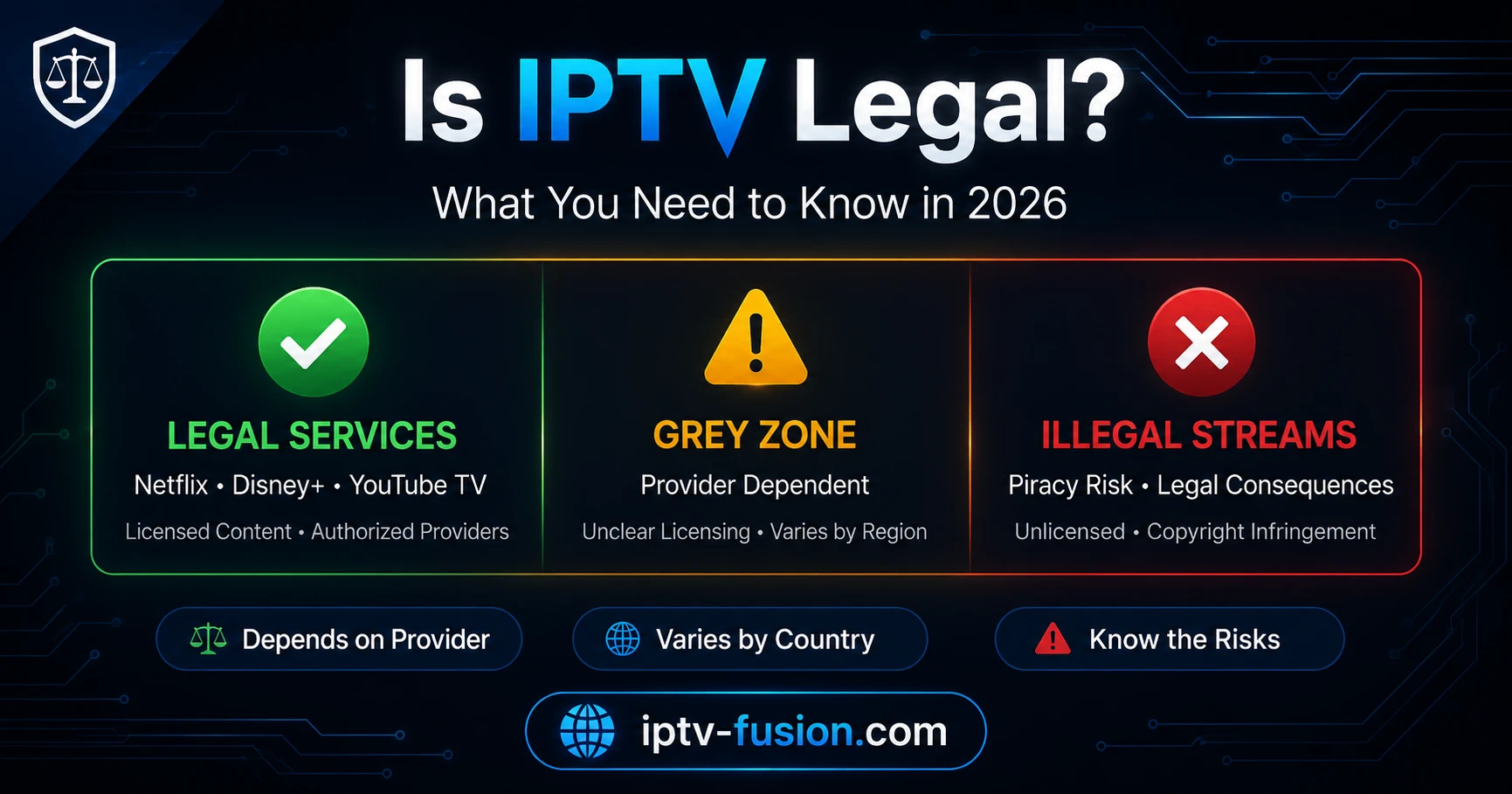
Is IPTV legal: technology, service and viewer as three separate questions
One question, three separate answers
QuestionAnswerWhat decides it
Is the technology legal?YesIPTV is just TV over an IP network; operators use it for their own TV services
Is this service legal?DependsWhether the provider holds the rights to the channels and films it streams
Am I at risk as a viewer?Depends on your countryNational law and how it is enforced

Player apps sit in the first row. TiviMate, IBO Player Pro and similar apps contain no channels; they play whatever login or playlist you add. The legal question is always the content source, not the player.

Where the law draws the line

WhereKey ruleWho it targets
European UnionFilmspeler ruling (C-527/15), 2017: selling boxes preloaded with links to unauthorised streams is a communication to the public; streaming from obviously unauthorised sources is not covered by the temporary-copy exceptionSellers, and viewers who knowingly use unauthorised sources
ItalyLaw 93/2023 against online piracy, enforced with AGCOM: fast blocking of pirate streams and fines of €154 to €5,000 for viewersOperators and viewers
GermanyThe CUII, a body set up by internet providers and rights holders, recommends blocking structurally infringing sitesSites and operators
United KingdomThe Digital Economy Act 2017 raised the maximum sentence for online copyright infringement to 10 yearsMainly those who distribute content
United StatesFederal copyright law, explained by the U.S. Copyright Office; a 2020 law made large-scale commercial illegal streaming a felonyOperators of illegal services

The pattern is the same everywhere: the law cares about rights, not about the delivery technology. Italy is the clearest example of a country that also fines viewers.
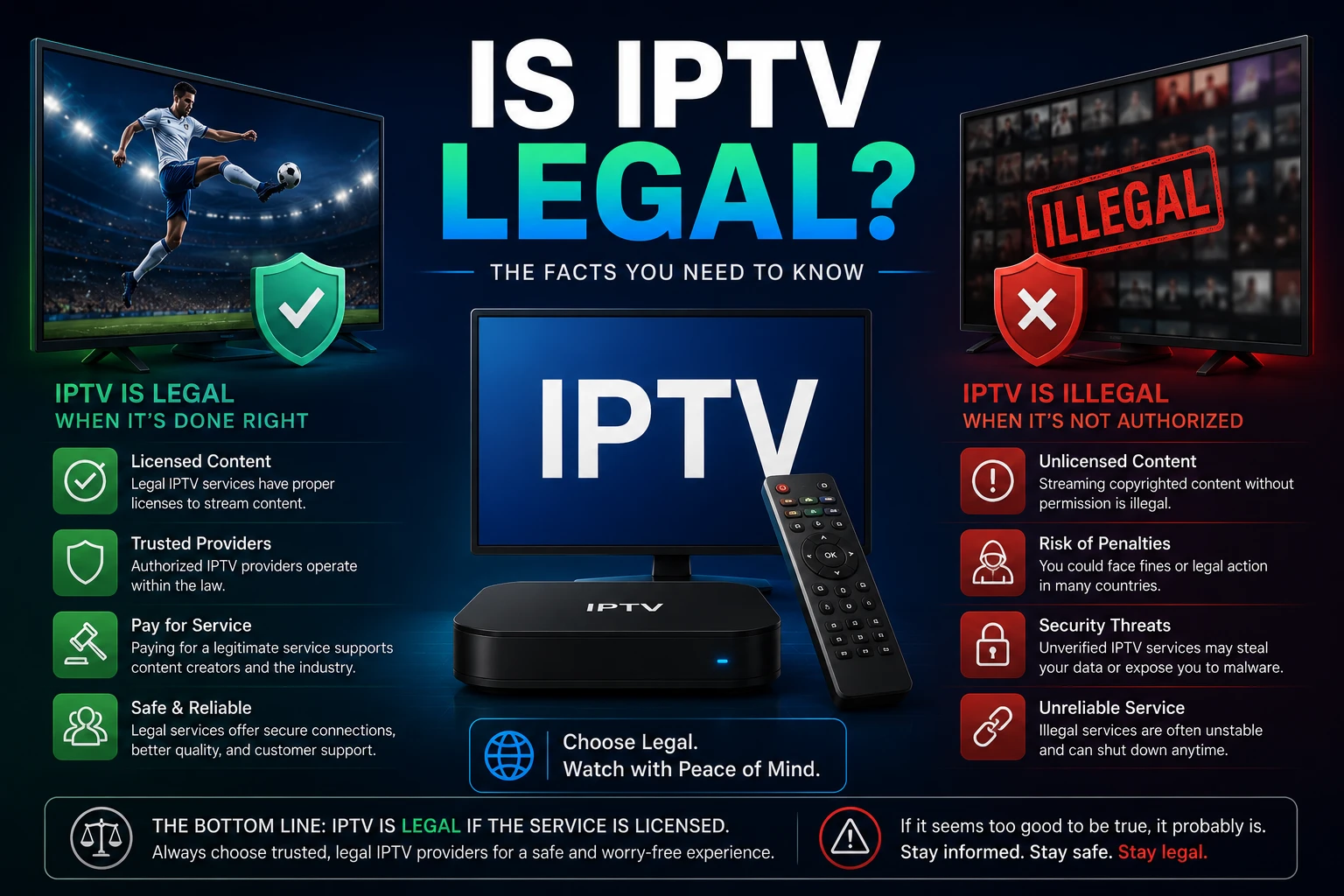
Checking an IPTV provider's terms and refund policy before paying
Five minutes of checking before you pay

Watch on any device — no cable needed

Start your free 24-hour trial. No credit card required.

Start Free Trial

A five-minute check before you pay any seller

CheckGood signWarning sign
Who runs itCompany or contact details you can verifyNo name, only a chat handle
TermsWritten terms and a privacy policyNothing in writing
RefundsA clear refund or money-back policy"No refunds" or silence
PaymentNormal payment methods with buyer protectionCrypto or gift cards only
PriceRealistic for what is offeredEverything for almost nothing
HardwareApps you install yourself from official storesPreloaded "fully loaded" boxes

The practical risks beyond the law

  • Unsafe apps. Install players only from official stores or the developer's own site. On a Fire TV Stick, that means the Downloader codes 481220 (IBO Player Pro) or 272483 (TiviMate), or tivimate.com/apk. Our Fire TV Stick guide shows the safe route step by step.
  • Lost money. Sellers without terms or refunds can disappear overnight with a year's payment.
  • Sudden blackouts. Blocking measures, such as those in Italy and Germany, can cut a service off without warning.

What IPTV Fusion puts in front of you

We would rather you check us than take our word for it. IPTV Fusion publishes its plans and prices, offers a free 24-hour trial with no credit card, gives every plan a 7-day money-back guarantee and answers on WhatsApp and Telegram around the clock. Compare those points with the table above, read the plan details, and check the rules in your own country before you subscribe. If you are new to the technology itself, start with what IPTV is and how it works.

The short version

IPTV is legal technology. A service is only as legal as the rights it holds, and viewers face different rules depending on where they live, with Italy fining viewers directly. Check the seller, install apps from official sources, and never pay upfront for something you have not tested.

Test before you pay: start a free 24-hour IPTV Fusion trial, no credit card.

Watch on any device — no cable needed

Start your free 24-hour trial. No credit card required.

Frequently Asked Questions

Is IPTV legal?
The technology is legal: telecom operators deliver their own TV services over IP. Whether a particular service is legal depends on whether it holds the rights to the channels and films it streams, and the rules for viewers vary by country.
Can viewers be fined for using IPTV?
In some countries, yes. Italy's Law 93/2023 introduced fines of €154 to €5,000 for viewers of pirated streams. In most other countries, enforcement has mainly targeted the people who run or sell unauthorised services, but that is a practice, not a guarantee.
Does a VPN make IPTV legal?
No. A VPN hides your connection from your internet provider, but it does not change whether the service has the rights to what it streams. If the source is unauthorised, it stays unauthorised.
Are IPTV apps like TiviMate illegal?
No. TiviMate, IBO Player Pro and similar players are ordinary apps that play the playlists or logins you add. They contain no channels. Install them from the official store or the developer's site, for example tivimate.com/apk or Downloader code 272483.
How can I check whether an IPTV provider is legitimate?
Look for company or contact details, written terms and a refund policy, normal payment methods and a price that is realistic for what is offered. Anonymous sellers, crypto-only payment and no refunds are warning signs.
Is this legal advice?
No. This guide explains the general picture. For your own situation, check the rules in your country or ask a lawyer.